
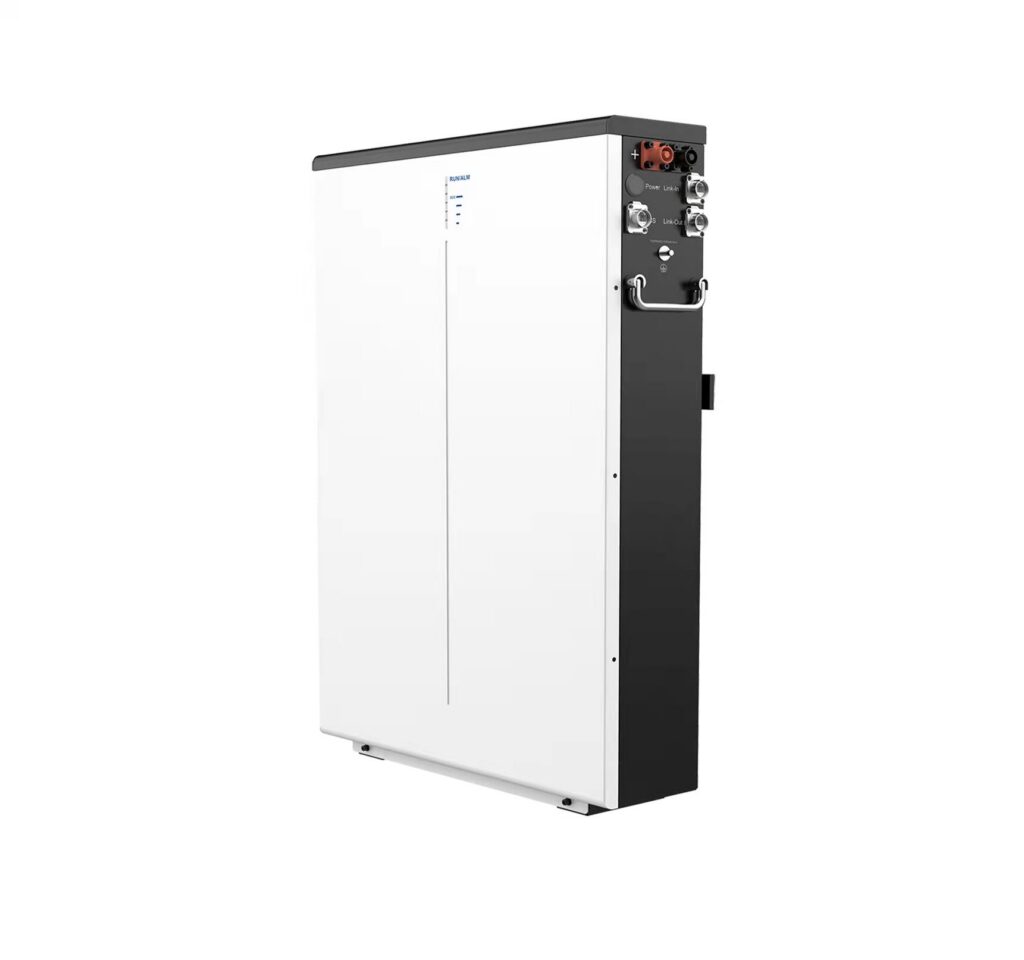
Product Overview
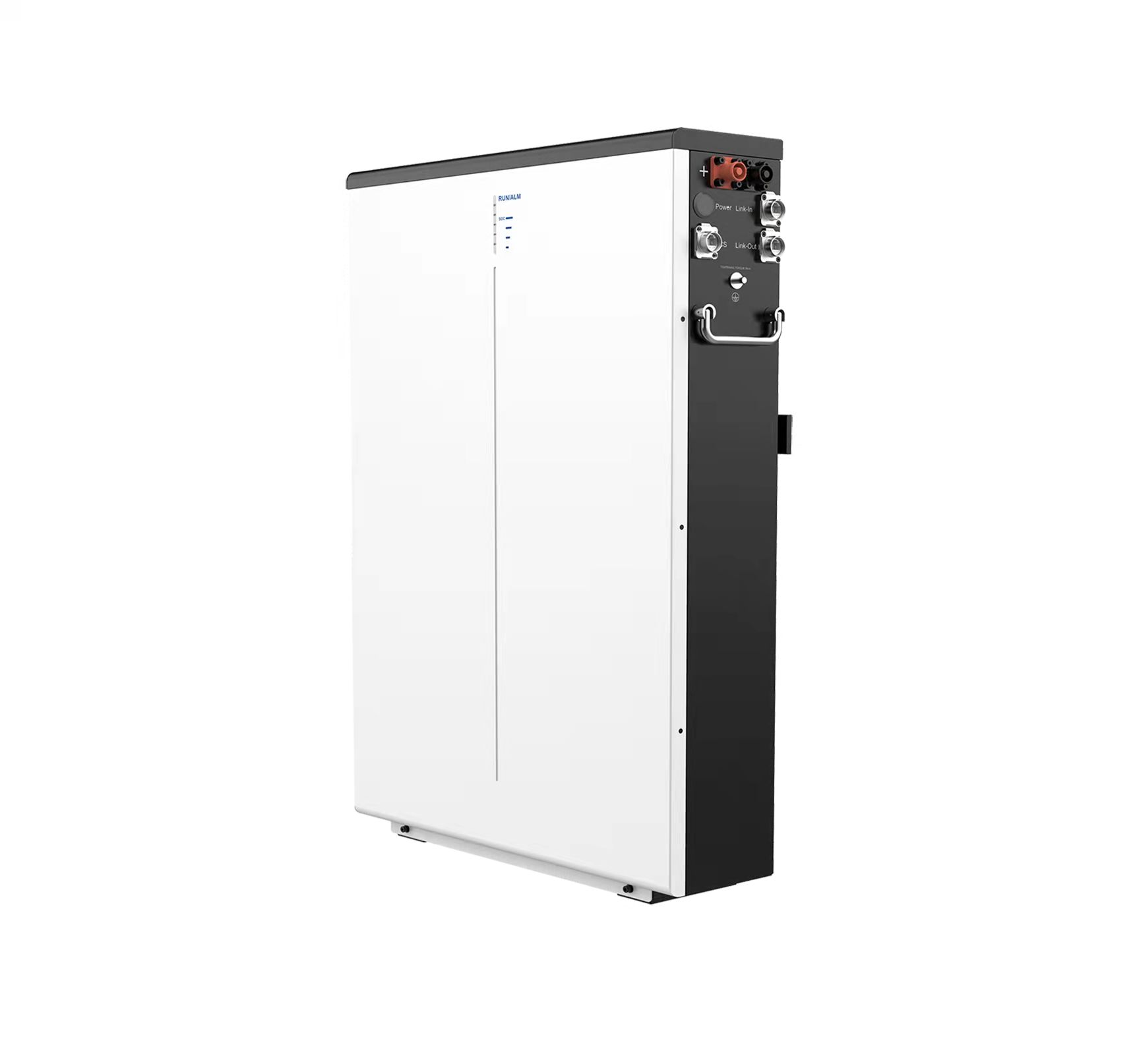
A 5.12kWh wall-mounted LiFePO4 home battery (51.2V 100Ah) — a compact powerwall for residential energy storage, solar self-consumption and backup power. The wall-mount design keeps floor space free while delivering serious capacity for the home. Nominal energy is 5.12kWh (51.2V × 100Ah). Usable energy depends on depth of discharge: at 80% DoD it delivers roughly 4.1kWh of usable energy per cycle.
For distributors, installers and energy storage brands, this is a proven form factor: 51.2V (16S LiFePO4) matches the dominant residential hybrid-inverter ecosystem, so one SKU integrates with the widest range of solar and backup installations. Multiple units can be paralleled for larger homes and small commercial projects.
As a China-based LiFePO4 battery supplier and OEM/ODM solutions provider, we configure capacity, enclosure, BMS and branding to your market requirements. Specifications below reflect commonly available configurations; final specifications are confirmed per order.
- Wall-mount powerwall form factor: slim cabinet mounts to the wall — no floor footprint, clean install in garages and utility rooms.
- 16S 51.2V architecture: native match for 48V-class hybrid inverters (see the 15S/16S note below).
- Parallel-ready: expand capacity by paralleling multiple units — confirm max parallel count for your order.
- B2B ready: wholesale pricing, OEM branding, ODM configuration and sample orders supported.
Nominal vs usable energy — read the label correctly. 5.12kWh is the nominal energy (51.2V × 100Ah). What you can actually draw per cycle is the usable energy: ≈4.1kWh at 80% DoD, up to ≈5.12kWh at 100% DoD (shallower cycling extends life — see our cycle life vs depth of discharge guide). Compare suppliers on usable energy at a stated DoD, not on nominal kilowatt-hours alone.
48V vs 51.2V — the market naming habit. “48V” LiFePO4 batteries on the market are usually 16S (51.2V nominal), because 16 × 3.2V = 51.2V pairs with 48V-class hybrid inverters. True 15S packs (48.0V nominal) exist but are less common in residential ESS. This page’s typical configuration is 16S / 51.2V nominal; 15S is available as an ODM option. Absorption voltage differs: ≈57.6–58.4V for 16S vs ≈54.0–54.75V for 15S — set the inverter/charger to match the actual configuration.
Technical Specifications
Each parameter is marked Typical (commonly available configuration), Optional (available on request), or To Be Confirmed (confirmed against the datasheet for your order). Nothing below should be read as a guarantee for any specific unit — always confirm against the order datasheet.
| Group | Parameter | Value | Status |
|---|---|---|---|
| Electrical | Chemistry / configuration | LiFePO4, 16S | Typical |
| Nominal voltage | 51.2V (48V class) | Typical | |
| Rated capacity | 100Ah | Typical | |
| Nominal energy | 5.12kWh | Typical | |
| Usable energy (80% DoD) | ≈4.1kWh | Typical | |
| 15S configuration | 48.0V nominal, 4.8kWh — available as ODM option | Optional | |
| Mechanical | Dimensions (L×W×H) | To be confirmed against order datasheet | To Be Confirmed |
| Weight | ≈45–50 kg (configuration dependent) | Typical | |
| Mounting | Wall-mounted, bracket included (typical) | Typical | |
| Enclosure | Steel cabinet, indoor installation | Typical | |
| BMS & communication | Continuous discharge current | 100A typical (higher-current BMS on request) | Typical / Optional |
| Protections | Over-charge, over-discharge, over-current, short-circuit, over-temperature | Typical | |
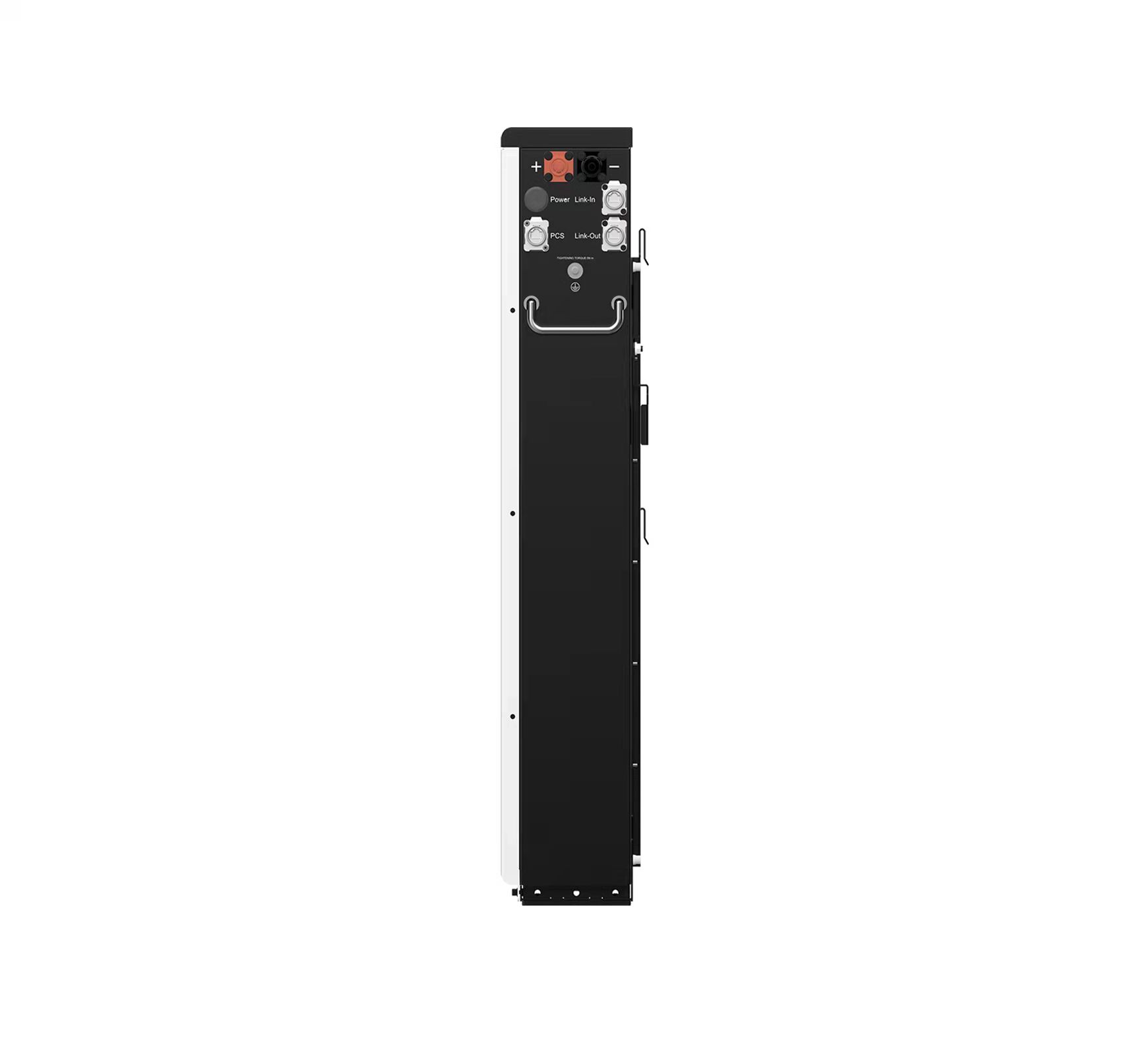
| Communication | CAN / RS485 for inverter closed-loop communication | Typical | |
| Parallel expansion | Supported — confirm maximum parallel count per order | Typical | |
| Charging | Charge voltage — 16S (absorption) | 57.6–58.4V | Typical |
| Charge voltage — 15S (absorption) | 54.0–54.75V (if 15S configuration ordered) | Optional | |
| Recommended charge current | 20–50A (0.2–0.5C) | Typical | |
| Environmental | Charge temperature | 0°C to 45°C (do not charge below 0°C unless low-temp protection fitted) | Typical |
| Discharge temperature | −20°C to 60°C (typical) | Typical | |
| Cycle life | Cycle life @ 80% DoD, 25°C | 4,000+ cycles (standard test conditions) | Typical |
| Calendar / service life | 10+ years in typical residential ESS service | Typical | |
| Docs | Datasheet, UN38.3, MSDS, certifications | Coordinated per order — request the current document package | To Be Confirmed |
Compatibility & Applications
Hybrid inverter compatibility
The 51.2V nominal window works with the mainstream 48V-class hybrid inverters used in residential solar + storage. For best results use closed-loop communication (CAN/RS485) where the inverter brand supports the BMS protocol — confirm protocol compatibility for your inverter model before ordering. Set the inverter’s battery charge voltage to match the actual configuration: 57.6–58.4V absorption for 16S (typical), 54.0–54.75V if a 15S build is ordered.
Where it fits
- Residential solar self-consumption: store daytime PV generation for evening use; pair with a hybrid inverter and size the array/battery with our solar battery sizing calculator.
- Backup power: wall-mounted in garage or utility room, automatic switchover via the hybrid inverter — keeps lights, fridge, internet and essentials running in outages.
- Time-of-use arbitrage: charge off-peak, discharge at peak rates where the tariff structure rewards it (confirm local regulations and inverter support).
- Capacity expansion: parallel multiple units as household loads grow — confirm maximum parallel count and wiring requirements for your order before designing the system.
Charging & Inverter Matching
In residential ESS the hybrid inverter is the charger: set its battery profile to LiFePO4/lithium with absorption 57.6–58.4V for 16S. No equalization stage. See how to charge LiFePO4 batteries and the charging voltage chart.
- Closed-loop (preferred): CAN/RS485 between BMS and inverter lets the BMS govern charge voltage and current — confirm protocol support for your inverter brand.
- Open-loop (voltage-controlled): set absorption 57.6–58.4V, float 54.4–55.2V (or per inverter manual); the BMS remains the last line of protection.
- 15S builds: if a 15S configuration is ordered, absorption is 54.0–54.75V — do not apply 16S voltages to a 15S pack.
- Parallel systems: identical configuration and similar state of charge before paralleling; follow the wiring diagram for your order.
Lifespan & Safety
Cycle life: 4,000+ full-equivalent cycles at 80% DoD, 25°C, under standard test conditions. In residential ESS service — typically one shallow-to-moderate cycle per day — 10+ years of service is typical. Sustained heat, routine 100% DoD cycling and chronic over-charging shorten life. Learn how depth of discharge shapes cycle life and whether to charge to 100%.
Safety: LiFePO4 chemistry is thermally stable with a high thermal-runaway onset temperature compared with other lithium-ion chemistries — but no battery is zero-risk. Safe service depends on BMS protections, correct inverter charge settings, proper fusing and wiring, adequate ventilation, and mounting on a non-combustible wall surface with clearances per the installation manual. See our battery safety hub. When evaluating any supplier’s cycle-life claims, use our verification checklist.
Wholesale, OEM & ODM
We support distributors, wholesalers, installers and energy storage brands with flexible cooperation models. New to battery importing? Start with our MOQ and sample order guide, then see the wholesale buyer’s guide for sourcing from China step by step.
- Wholesale: volume pricing for distributors, installers and resellers; terms vary by configuration and order size — contact us with your volume requirements.
- OEM branding: custom enclosure color, logo, labeling and packaging for your brand.
- ODM configuration: capacity, 15S/16S voltage, BMS features, communication protocols and parallel configuration matched to your market.
- Sample orders: sample and trial orders welcome for evaluation before volume commitment.
- Documentation support: datasheets, UN38.3/MSDS and market-specific files coordinated per order — request the current document package.
Frequently Asked Questions
What inverter works with this 51.2V battery?
Most 48V-class hybrid inverters accept the 51.2V nominal window. Confirm the inverter’s battery voltage range in its datasheet, and choose CAN/RS485 closed-loop communication where the inverter brand supports it.
What is the difference between nominal and usable energy?
Nominal energy is 5.12kWh (51.2V × 100Ah) — the nameplate figure. Usable energy is what you can draw per cycle: about 4.1kWh at 80% depth of discharge, up to the full 5.12kWh at 100% DoD. Most residential ESS designs work around 80–90% DoD to extend service life.
Can I parallel multiple units?
Yes — parallel expansion is supported subject to configuration. Confirm the maximum parallel count and wiring requirements for your order before designing the system, and parallel only units of identical configuration at similar state of charge.
Is this a 48V or a 51.2V battery?
Both names describe the same typical product: 16 series-connected LiFePO4 cells give 51.2V nominal, marketed as “48V class” because it pairs with 48V hybrid inverters. True 15S (48.0V nominal) packs are available as an ODM option — charge voltages differ, so always match the inverter setting to the actual configuration.
How is it installed?
Wall-mounted using the included bracket, typically in a garage or utility room on a non-combustible wall with clearances per the installation manual. Installation should be performed by a qualified installer familiar with low-voltage DC and the local electrical code.
Do you offer wholesale pricing and samples?
Yes. We work with distributors and installers — contact us with your volume requirements for a quotation. Sample and trial orders are welcome for evaluation. We do not publish fixed wholesale prices because terms vary by configuration and volume.
Technical Resources
- LiFePO4 battery charging guide — methods, voltages and troubleshooting
- Charging voltage chart — absorption/float targets by system voltage
- Cycle life vs depth of discharge — how DoD shapes lifetime
- Battery safety hub — handling, installation and thermal safety
- How to verify cycle-life claims — procurement checklist
- LiFePO4 vs lead-acid — total-cost comparison for buyers