
RV Battery Solutions
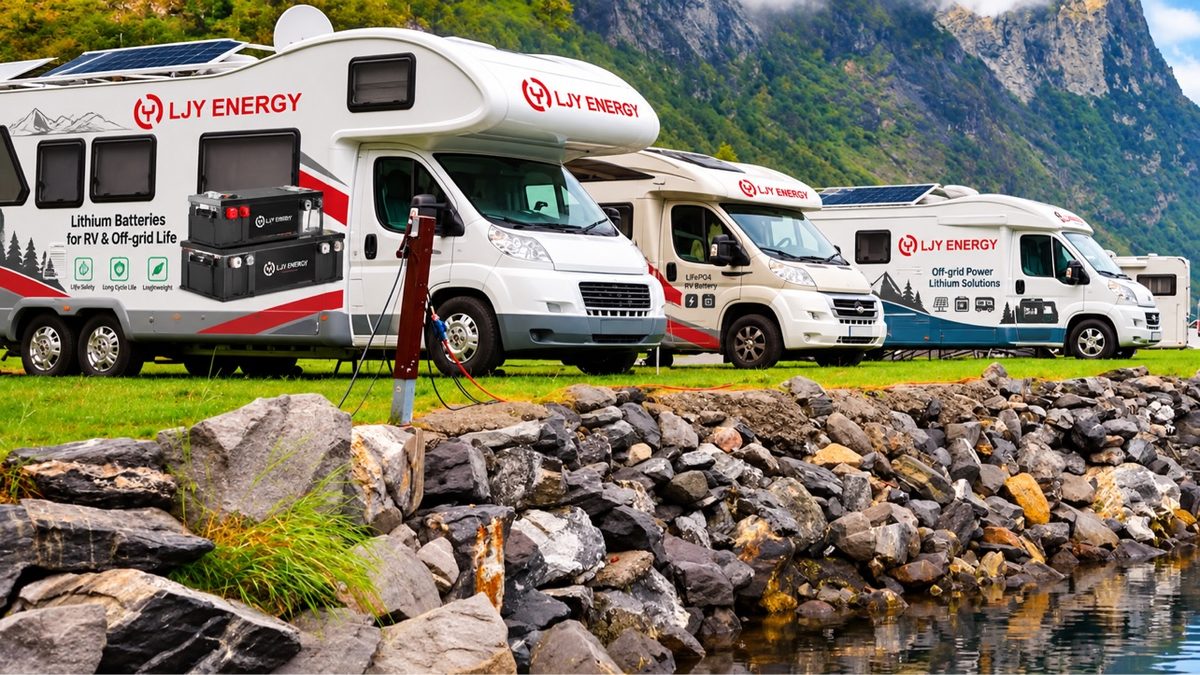
RV owners, converters, rental fleets and equipment buyers are replacing lead-acid house batteries with LiFePO4 because the practical gains are immediate: less weight for the same installation space, more usable energy from each charge, longer service life under regular cycling and no routine watering or equalization. A lithium system can support longer off-grid stays and more consistent power for refrigeration, lighting, water pumps, ventilation, electronics and inverter loads.
LJY Energy supplies standard and configured LiFePO4 batteries for distributors, RV outfitters, installers, rental-fleet buyers and OEM brands. LJY Energy is a China-based LiFePO4 battery supplier and OEM/ODM solutions provider offering customization, project-confirmed specifications and export supply coordination. We help buyers match voltage, capacity, BMS current, charging method, enclosure and branding requirements to the vehicle and market they serve.
What RV Systems Typically Need
Most RV house-battery systems are built around 12V DC loads. A 12.8V LiFePO4 battery is therefore the usual starting point for replacing a 12V lead-acid bank, provided the charger, inverter and protection devices are compatible with lithium charging requirements. It can retain the vehicle’s basic 12V architecture while increasing usable capacity and reducing battery weight.
A practical daily energy budget for many RVs is approximately 1–3kWh, covering some combination of a compressor fridge, LED lighting, water pump, fans, phones, laptops and entertainment equipment. Actual consumption varies widely with climate, appliance efficiency, heating or air-conditioning loads, inverter use and time away from shore power. Buyers should size from a measured or itemized daily load rather than selecting capacity by battery size alone.
- 12V systems: best suited to conventional RV electrics, smaller and mid-size rigs, and inverter loads commonly in the 1–3kW range.
- 24V systems: worth considering for larger RVs and caravans where the inverter, charger and DC equipment are designed for 24V; higher voltage reduces current for the same power, although it is not a direct replacement for a 12V system without the matching equipment.
- Inverter sizing: check both continuous and surge ratings. Motors, compressors and microwaves can create short peaks well above their running power.
- Solar charging: pair the battery with an MPPT controller programmed for LiFePO4 and confirm panel voltage, charge current and available roof space against the expected daily energy deficit.
- Driving and shore charging: use a suitable DC-DC charger for alternator charging and a LiFePO4-profile charger for shore power. Do not assume an older converter-charger is compatible merely because it charges lead-acid correctly.
- Cold climates: select low-temperature charge protection for freezing conditions. A self-heating configuration is appropriate where the vehicle must recharge below freezing rather than waiting for the battery compartment to warm.
Recommended Battery Solutions
The following standard models cover the most common RV replacement and new-build paths. Final compatibility should be confirmed against inverter current, charger settings, installation dimensions and the selected battery’s series and parallel limits.
12.8V 200Ah LiFePO4 Battery with LCD and 250A BMS
Main recommendation for full-time RVs and 2–3kW inverter systems that need higher continuous discharge capability plus an at-a-glance LCD state-of-charge display.
12V 100Ah Deep Cycle LiFePO4 Battery
Entry-level drop-in direction for smaller rigs, weekend use and moderate daily loads where installation space and budget matter.
12V 300Ah LiFePO4 Battery
Higher-capacity single-battery option for extended off-grid stays, larger daily consumption or fewer parallel connections.
12V 100Ah Heated LiFePO4 Battery
Cold-climate configuration for winter travel and vehicles that need a self-heating function before charging in below-freezing conditions.
24V 200Ah LiFePO4 Battery
For larger RV and caravan electrical systems designed around 24V equipment and higher inverter loads.
12.8V Private-Label Battery Program for RV & Marine Brands
For brands building an own-label RV and marine line: a structured private-label program covering model selection, branding and repeat supply.
12V/24V LiFePO4 Starter Battery Series
Dual-purpose cranking and deep-cycle models for engine-start applications in RV and marine service.
Need to compare the full voltage and capacity range before choosing a model? Explore the complete 12V LiFePO4 battery series.
Key Selection Factors
- Start with daily kWh: list each load, its power and hours of use, then allow for inverter losses and the autonomy days required. A battery that is adequate for overnight stops may be undersized for several days without driving or strong solar input.
- Match BMS current to the inverter: at 12V, even a 2kW inverter can draw very high DC current. Confirm continuous and peak BMS ratings, cable size, fuse protection and voltage drop rather than comparing capacity alone.
- Audit every charge source: alternator, solar controller, shore charger and generator-powered charger should all use compatible voltage settings. Disable lead-acid equalization and use a DC-DC charger where required for controlled alternator charging.
- Measure the battery location: confirm footprint, height, terminal orientation, cable reach, ventilation, service access and secure mounting. Compare weight with the vehicle payload and the old battery bank, not just the weight of one replacement unit.
- Plan for temperature: low-temperature charging protection helps prevent charging below the permitted range. For regular winter use, discuss insulation, battery placement and self-heating instead of relying on protection alone.
- Respect series and parallel limits: expansion limits are model-specific. Use the configuration confirmed for the selected battery, match units correctly and verify BMS, cabling and fuse requirements before designing a multi-battery bank.
- Choose standard models for repeat supply: distributors and fleet buyers should prioritize repeatable configurations, consistent labeling and documented settings so replacement and expansion units remain manageable across vehicles.
The correct battery is not determined by Ah alone. Nominal voltage, usable energy, inverter current, charging equipment, temperature and physical installation must work as one system.
Technical Guides
- RV Battery Selection Guide — a structured method for matching battery capacity and system voltage to real travel patterns.
- How to Charge a LiFePO4 Battery — charging stages, charger selection and settings for solar, shore and vehicle charging.
- LiFePO4 Charging Voltage Chart — reference charge-voltage ranges for common battery configurations.
- LiFePO4 vs Lead-Acid Batteries — compare usable capacity, weight, cycle life and ownership considerations before converting.
Wholesale & OEM/ODM Inquiry
LJY Energy supports RV manufacturers, converters, outfitters, installers and battery distributors with sample evaluation, repeat wholesale supply and coordinated OEM/ODM configurations through qualified manufacturing partners. Depending on the project, requirements may include enclosure and label branding, BMS current, monitoring functions, low-temperature protection or heating, terminal layout and packaging.
- RV manufacturers and converters: align the battery with the vehicle electrical platform, installation compartment and after-sales replacement strategy.
- Outfitters and installers: standardize a small set of models for common lead-acid conversions and inverter packages.
- Distributors and fleet buyers: plan repeatable specifications for ongoing replacement, rental-fleet upgrades and seasonal demand.
- OEM brands: coordinate product presentation and configuration around your target RV segment without assuming that one battery fits every vehicle.
Before requesting a quotation, review the MOQ and sample order guide and the LiFePO4 wholesale buyer’s guide. Then send us the vehicle type, system voltage, daily load, inverter size, charging sources, installation dimensions and target quantity so the recommendation starts from the actual system rather than a generic model list.
Frequently Asked Questions
What size battery does an RV need?
Size from daily energy use and required autonomy. Many RV systems fall in a planning range of roughly 1–3kWh per day, but refrigeration, inverter appliances, heating controls and climate can move the requirement substantially. A 12V 100Ah model may suit a small weekend rig, while full-time or higher-load systems often need 200Ah, 300Ah or a correctly configured multi-battery bank.
Can LiFePO4 replace my lead-acid battery directly?
In many 12V RVs it can replace the lead-acid bank physically and electrically, but the complete system must be checked first. Confirm battery dimensions, terminal layout, fuse and cable ratings, inverter compatibility and—most importantly—whether the shore charger, solar controller and alternator charging path provide a suitable LiFePO4 profile. An older lead-acid converter or uncontrolled alternator connection may need to be changed.
Do I need a special charger for an RV LiFePO4 battery?
You need charging equipment with compatible voltage and termination behavior. That may be a LiFePO4-profile shore charger, an MPPT solar controller with the correct settings and a DC-DC charger for the alternator. Avoid equalization or desulfation modes designed for lead-acid batteries.
What should I choose for winter RV use?
At minimum, choose low-temperature charge protection if the battery may be charged in freezing conditions. If the vehicle must recharge while the battery itself remains below freezing, consider a self-heating model and confirm how the heating function is powered and controlled. Battery placement and insulation also affect winter performance.
Is 12V or 24V better for an RV?
12V is the practical choice for most existing RV systems because the vehicle loads, chargers and accessories are already designed for it. A 24V system can reduce current in a larger new build, but the inverter, charger and DC loads must all be selected for 24V. Do not change system voltage by changing only the battery.